


Assets and liabilities are two fundamental components of a company’s financial statements. Assets represent resources a company owns or controls with the expectation of deriving future economic benefits. Liabilities, on the other hand, represent obligations a company has to other parties.
Example 3: Deferred Revenue

In this context, a lower current ratio may indicate a higher risk of bankruptcy or insolvency. Unearned RevenuesUnearned revenues represent advance payments received for goods or services that have not yet been delivered or fully earned. Once the product or service is supplied, the unearned revenue liability decreases as the asset is recognized on the balance sheet. The most common example of unearned revenues is membership subscriptions and magazine subscriptions where payment is collected upfront but the service is provided over an extended period. Dividends PayableCompanies issue stocks to raise capital, and some may offer dividends to shareholders. The amount owed to shareholders following the declaration of a dividend is recorded as a current liability under dividends payable.
- This classification is based on the timeframe in which the obligations are expected to be settled.
- Loans are classified as long-term liabilities, as we expect to pay them off over an extended period, usually over a number of years.
- Liabilities are one of 3 accounting categories recorded on a balance sheet, along with assets and equity.
- These accounts represent the company’s obligations to pay for goods or services received, loans taken out, employee salaries, and taxes owed.
- Any liability that’s not near-term falls under non-current liabilities that are expected to be paid in 12 months or more.
Examples of Liabilities in Accounting Explained
In conclusion, understanding liabilities and their classification as current or long-term is essential for investors, lenders, and companies alike. This knowledge helps to assess a company’s financial health, evaluate its ability to meet its obligations, and make informed assets = liabilities + equity decisions about investments and financing. Liabilities are an essential component of a company’s financial framework, offering valuable insights into its commitments, financial health, and growth potential.
Difference Between Liabilities and Current Liabilities
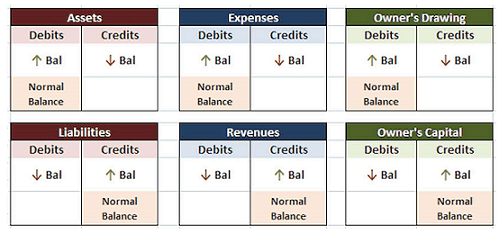
They’re recorded on the right side of the balance sheet and include loans, accounts payable, mortgages, deferred revenues, bonds, warranties, and accrued expenses. Liability accounts are a crucial component of a company’s financial statements. They represent the obligations that a company owes to its creditors and other third parties. Proper management of liability accounts is essential for maintaining a healthy cash flow. Liability accounts are an essential aspect of any organization’s financial statements. They represent the debts or obligations that the company owes to others, and they are used to track the company’s financial health.
It contains negative balances that offset the balance in a paired asset account on a company’s balance Bookkeeping for Painters sheet, revealing the net value of the asset. This general structure can be applied across all contra types, so if the parent account has a credit, the contra account will have a debit. Examples of revenue contra accounts are Sales Discounts, Returns and Allowances. Lastly, unamortized investment tax credits (UITC) represent the difference between the taxable cost of an asset and the amount that has already been deducted as a tax benefit over time. These liabilities can impact a company’s financial statements significantly by altering its net income and cash flows.
- A retailer has a sales tax liability on their books when they collect sales tax from a customer until they remit those funds to the county, city, or state.
- Understanding liabilities becomes much easier when viewed through a real-world lens.
- The liabilities undertaken by the company should theoretically be offset by the value creation from the utilization of the purchased assets.
- Although average debt ratios vary widely by industry, if you have a debt ratio of 40% or lower, you’re probably in the clear.
- It may or may not be a legal obligation and arises from transactions and events that occurred in the past.
- Credit cards give an individual a certain amount of credit that can be used to make purchases, usually at a higher interest rate than a bank loan.
The Social Security (6.2%) and Medicare (1.45%) you withhold from paychecks, along with income taxes and benefit contributions, all represent money that’s not yours to keep. Owner’s funds/Capital/Equity – Last among types of liabilities is the amount owed to proprietors as capital, it is also called owner’s equity or equity. From studying the basics of debit and credit, balance sheet accounts have a healthy balance. This is the amount of income tax you owe to the government but haven’t paid yet. Just like personal taxes, business taxes can’t be ignored—Uncle Sam always gets his due.

If one of the conditions is not satisfied, a company does not report a contingent liability on the balance sheet. However, it should disclose this item in a footnote on the financial statements. Because accounts liability accounts examples payables are expenses you have incurred but not yet paid for.
- Unearned revenue is money received or paid to a company for a product or service that has yet to be delivered or provided.
- Proper understanding and management of liabilities in accounting are essential for a company’s financial stability and growth.
- Contingent liabilities are potential liabilities that may arise in the future, depending on the outcome of a specific event.
- In balance sheet, the balance in the accumulated depreciation account is deducted from the original cost of the asset to report it at its book value or carrying value.
- Changes – It’s inevitable that you will need to add accounts to your chart in the future, but don’t drastically change the numbering structure and total number of accounts in the future.
Here are some accounts and subaccounts you can use within asset, expense, liability, equity, and income accounts. Rather than listing out each type of utility expense in your Expense category, you can use utility subaccounts to group them under Utilities. With a current ratio above 2, the company can comfortably meet its short-term obligations, demonstrating strong liquidity. These features give businesses the insights needed to improve creditworthiness, stabilise operations, and make data-driven decisions. With Alaan, managing liabilities becomes simpler, smarter, and more efficient.